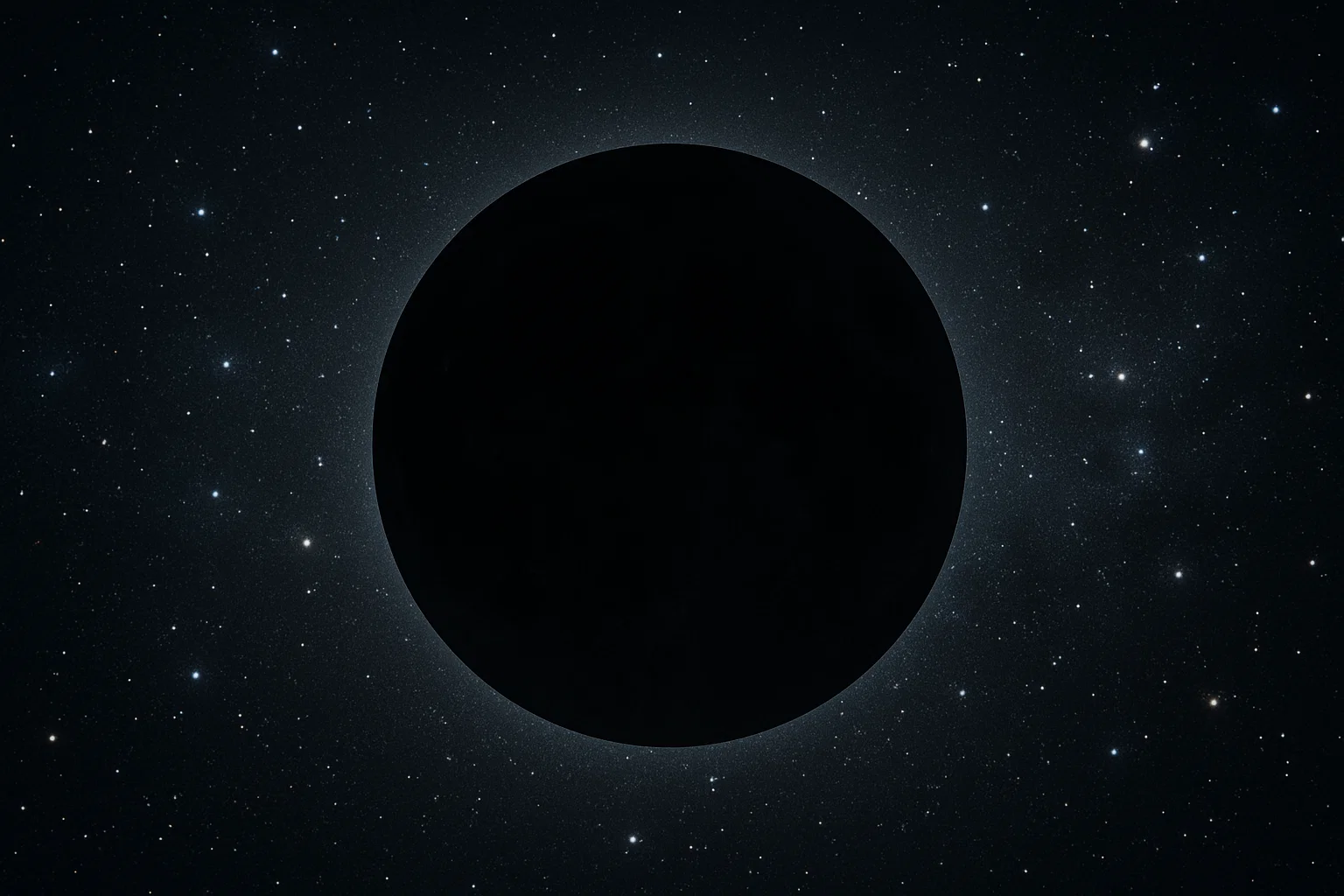
What is a New Moon? It’s the moment each month when the Moon becomes invisible to the naked eye, marking the official start of the lunar cycle. Though it may seem like nothing is happening in the sky, the New Moon is a precise astronomical event with real physical effects on Earth and deep cultural and symbolic meaning throughout human history.
What Is a New Moon in Astronomy?
The New Moon is the first significant phase of the lunar cycle. It occurs at the exact moment when the Sun and Moon are nearly in the same position in the sky, known as the ecliptic longitude.
Why the New Moon Disappears From View
During this alignment:
- The Moon is positioned between Earth and the Sun.
- The side lit by the Sun faces away from Earth.
- The side facing us is entirely in shadow.
Contrary to popular belief, the New Moon isn’t a dark object hanging in the night sky. Instead, it rises with the Sun in the morning and sets in the evening, hidden by daylight glare. This global, instantaneous moment marks the beginning of a new synodic month, lasting an average of 29.53 days until the next New Moon.
How the New Moon Affects Earth — Tides and Eclipses
Even though we can’t see it, the New Moon has powerful physical effects on our planet.
Spring Tides and Gravitational Pull
When the Sun and Moon align on the same side of Earth:
- Their gravitational forces combine.
- This creates spring tides — the highest high tides and lowest low tides of the month.
- These tides are named for water “springing forth,” not the season.
Solar Eclipses
The New Moon is also the only lunar phase during which a solar eclipse can occur. Although most months the Moon passes slightly above or below the Sun from our viewpoint, occasionally the alignment is exact enough for the Moon’s silhouette to cross the Sun’s disk, blocking its light.
The New Moon in Skywatching and Cultural Traditions
The nights around a New Moon are ideal for astronomers because the absence of moonlight reveals faint celestial objects, such as nebulae, galaxies, and the Milky Way.
The First Crescent and Earthshine
Many cultures—such as Islamic and Hebrew traditions—begin their months with the first visible crescent rather than the astronomical New Moon. This slim crescent appears one to two days after the alignment.
If you spot this early crescent, you may notice a soft glow on the unlit portion of the Moon. This is Earthshine, sunlight reflected from Earth’s oceans and clouds onto the Moon’s surface.
What the New Moon Symbolizes — A Time for Renewal
Beyond astronomy, the New Moon has long symbolized beginnings. In contrast to the Full Moon’s themes of culmination and release, the New Moon represents introspection, quiet, and potential.
A “Reset Point” in Spiritual Traditions
In astrology and various spiritual practices, the New Moon is associated with:
- Fresh starts
- Setting intentions
- Low-energy reflection
- Beginning new habits or projects
It signifies planting energetic “seeds” that will grow throughout the lunar month.
Final Thoughts — Why the New Moon Matters
Whether viewed through science, skywatching, or symbolism, the New Moon marks a powerful threshold. It reminds us that even in darkness, a new cycle is already beginning. From tidal forces to cultural calendars, this invisible moment shapes both our planet and our sense of renewal.