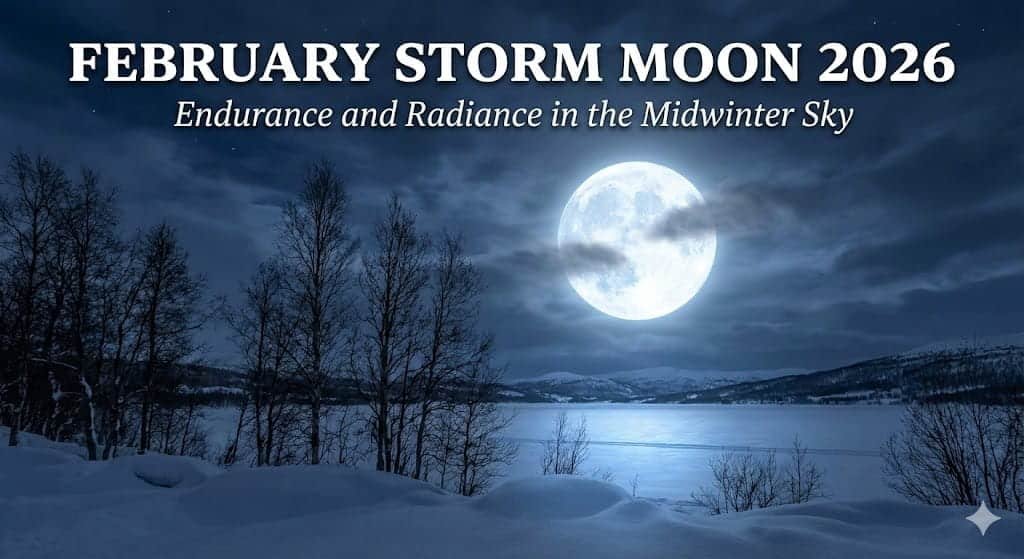
The February Storm Moon rises in the heart of winter, when nights are long, and the air is at its sharpest, serving as a beacon of resilience in the midwinter sky. While this full moon in February is most widely known today as the Snow Moon, it also carries a more evocative and fierce traditional title: the Storm Moon. This name is a reminder of harsh weather, deep drifts, and the survival spirit required to navigate one of the Northern Hemisphere’s most volatile months.
Names and Meanings of the February Storm Moon
The names given to this full moon are more than simple labels; they reflect how ancestors interacted with the land and the seasons. The “Storm Moon” emphasizes the unsettled weather of February, but it is only one of several traditional names for this lunation:
- The Snow Moon: The most common modern designation, associated with the month that historically sees the heaviest snowfall.
- The Hungry (or Hunger) Moon: A grimmer name from Indigenous traditions, marking a time when hunting was difficult, and winter stores began to dwindle.
- The Bear Moon: Used by many tribes to celebrate the time when bear cubs are born in their winter dens, showing that life continues despite the cold.
- The Ice Moon: A common European and Celtic variant that emphasizes the frozen landscape.
Popularized by references such as the Old Farmer’s Almanac and adapted from Algonquin lunar calendars and other traditions, these titles collectively portray February as a time of endurance rather than gentleness.
February Storm Moon 2026: Astronomical Context
In 2026, the February Storm Moon reaches its peak illumination on Sunday, February 1, at 5:09 p.m. Eastern Time. For observers tracking the full moon in February, these are the key details:
- Peak Illumination: 5:09 PM EST
- Constellation: Leo (The Lion)
- Visual Highlight: Proximity to the Beehive Cluster (M44)
- Primary Effect: The “Moon Illusion” during moonrise
These points place the 2026 February Storm Moon within the Leo constellation and near the Beehive Cluster, offering additional interest for anyone using binoculars or a telescope.
Understanding the Moon Illusion
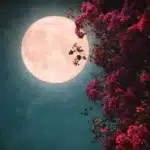
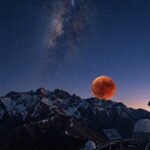
As the February Storm Moon rises near sunset, it often appears unnaturally large along the horizon. It may look close enough to touch the trees or sit behind distant buildings, but this effect is a psychological phenomenon known as the moon illusion. Even though the Moon’s physical size in the sky remains the same, our brains perceive it as larger when it is viewed alongside familiar objects such as buildings, trees, or mountains.
Cultural Roots and Modern Symbolism
Traditional full moon names once served as practical seasonal markers. For communities living closely with the land, these names helped track when to conserve food, when hunting would be difficult, and when to prepare for the coming spring.
Today, the February Storm Moon carries more symbolic meaning:
- Persistence: In nature-focused and Neo-Pagan traditions, this moon is often associated with rituals centered on purification and inner strength.
- The Turning of the Year: It functions as a “quickening,” signaling that while storms may still be fierce, we are halfway through the lunar cycle and moving gradually toward the thaw.
In this way, the Storm Moon bridges practical history and modern spiritual or reflective practices.
How to View the February Storm Moon in 2026
Because the 2026 Storm Moon falls in the sign of Leo, it is often described in astrological contexts as bringing a sense of “karmic spotlight” and boldness to the night. From a viewing perspective, a few simple steps can enhance the experience:
- Choose an open area facing east just as the sun begins to set, allowing a clear view of moonrise.
- Watch for the February Storm Moon as it appears along the horizon, when the moon illusion makes it look especially large.
- If the ground is covered in snow, the reflection of the 100% illuminated Snow Moon can create a blue-white glow across the landscape, making the night feel nearly as bright as twilight.
The February Storm Moon stands as a bright, steady presence during the most challenging part of winter. It serves as a reminder that the turning of the year continues, one full moon at a time.