
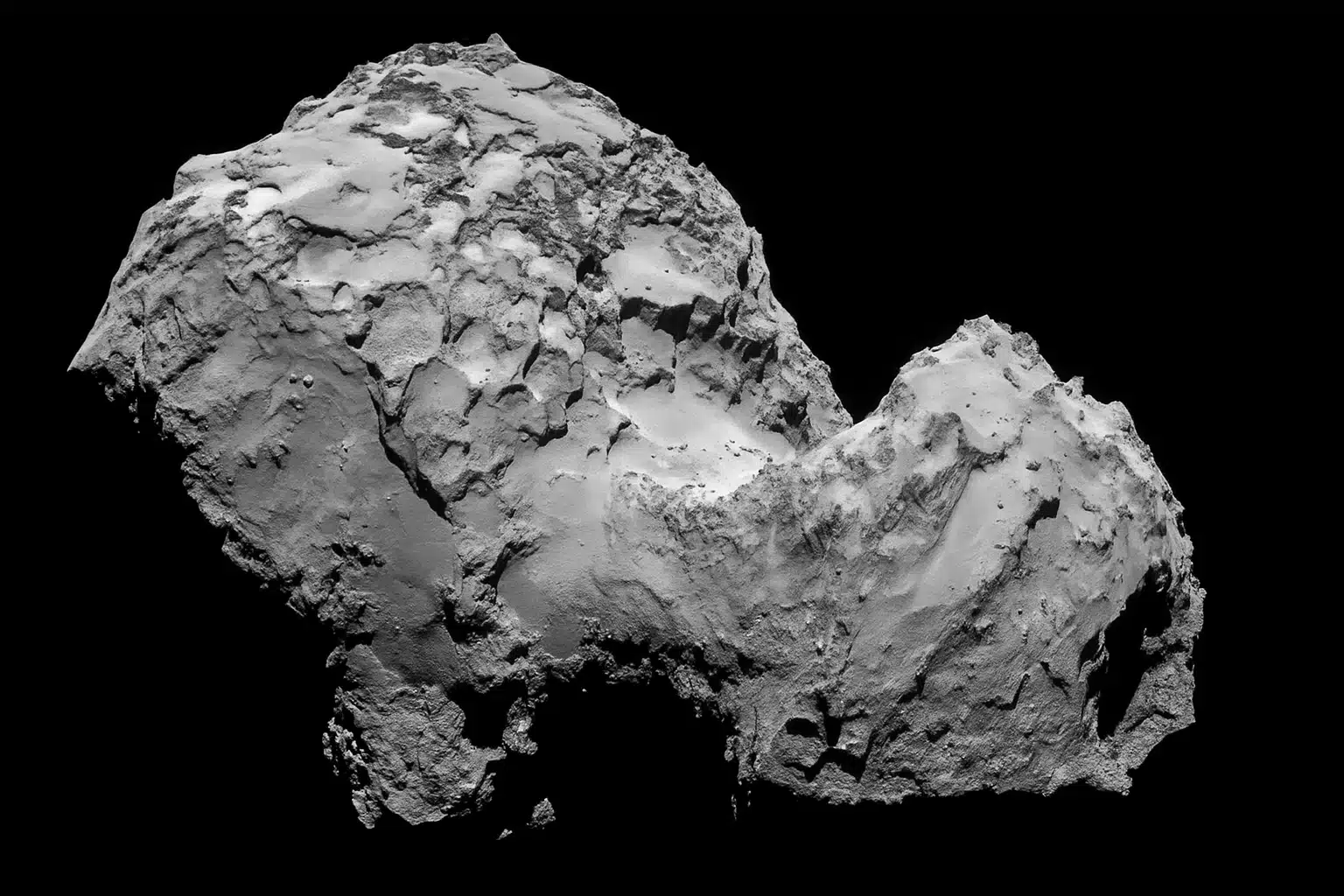
The 3200 Phaethon rock comet is one of the most unusual objects in the solar system, blurring the long-held divide between asteroids and comets. For decades, students were taught that comets were icy “dirty snowballs” from the outer solar system while asteroids were rocky bodies residing closer to the Sun. Rock comets, however, overturn this simple rule and reveal a far more complex picture.
What Makes the 3200 Phaethon Rock Comet Unique?
A rock comet is essentially an asteroid that behaves like a comet by brightening, shedding debris, and producing a visible tail. Unlike traditional comets made of ice and frozen gases, rock comets are composed mainly of rock, metal, and dust—yet they somehow still become active when heated by the Sun.
A Hybrid Between Asteroids and Comets
Rock comets suggest that the boundary between these two types of bodies is not as clear-cut as once believed. They operate like a transitional class, showing comet-like behavior while retaining an asteroid-like composition.
How a Rock Comet Works (The Science of “Fizzing” Rocks)
If rock comets lack ice, how do they create a tail? The answer lies in their extreme proximity to the Sun.
Thermal Fracture
When a rock comet nears the Sun, temperatures can reach 1,300°F (700°C). This intense heat fractures the surface material, causing chunks of rock to crack, pop, and eject dust into space.
Sodium Vaporization
Recent studies show that the heat also vaporizes sodium, creating a glowing tail of sodium gas—very different from the water-vapor tails of icy comets.
Why 3200 Phaethon Is the Archetype of Rock Comets
Discovered in 1983, 3200 Phaethon is the best-known example of a rock comet and continues to puzzle astronomers.
Parent of the Geminid Meteor Shower
Almost all meteor showers originate from icy comets. The Geminids are the rare exception—its debris trail comes from a rock, not ice.
A Comet-Like Orbit
Phaethon swings outward past Mars before diving inward to a point closer to the Sun than Mercury, a dramatic orbit typically seen in comets.
It’s an Unusual Blue Color
Phaethon’s blue surface is rare among asteroids, hinting at a unique, sun-baked composition.
A Tail Made of Sodium Gas
For years, astronomers believed Phaethon had a dust tail. A major 2023 study revealed that its visible tail is likely sodium gas, glowing as it streams from the super-heated rock.
Rock Comet vs. Typical Comet — Key Differences
Composition and Activity
- Rock Comet (e.g., 3200 Phaethon)
- Made of rock and metal
- Activated through thermal fracture
- Produces sodium gas and rocky dust
- Can generate meteor showers (Geminids)
- Typical Comet (e.g., Halley)
- Made of ice, dust, and frozen gases
- Activates through sublimation
- Produces water-vapor tails
- Also generates meteor showers (e.g., Perseids)
These differences show that rock comets occupy a transitional place between asteroids and comets, offering new insights into the solar system’s evolution.
Why the 3200 Phaethon Rock Comet Matters
Rock comets provide evidence that some asteroids may be extinct comets, stripped of their ancient ice reserves after countless close passes to the Sun. They also help refine our understanding of how meteor showers form and how small bodies evolve over time.
The DESTINY+ Mission
To learn more, the Japanese Aerospace Exploration Agency (JAXA) is launching the DESTINY+ mission, scheduled for launch around 2028. The spacecraft will fly by 3200 Phaethon, analyze its dust, and help answer the longstanding mystery of how a rocky asteroid can mimic a comet so convincingly.