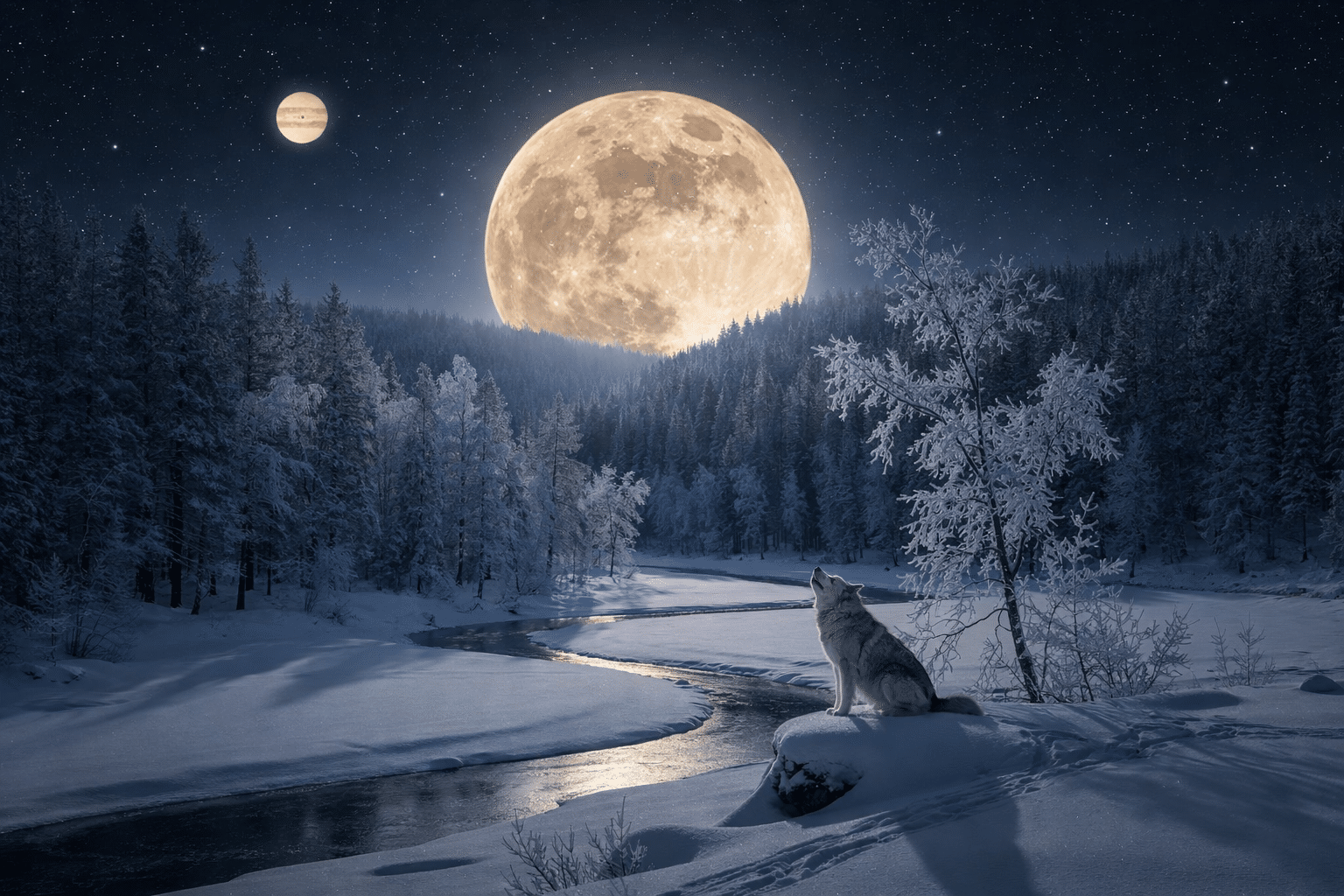
The 2026 Cold Moon arrived as a massive supermoon on January 3, lighting up the winter sky with exceptional brilliance. While January’s full moon is most commonly known as the Wolf Moon, various Indigenous and folklore traditions, such as those from Cree communities, also refer to this mid-winter event as the Cold Moon. This name emphasizes the intense chill and deep winter conditions characteristic of the time of year.
1. Timing and Viewing the 2026 Cold Moon
The full moon reached its peak on Saturday, January 3, 2026, at approximately 5:03 a.m. Eastern Time. For those observing from Missouri, the peak occurred at 4:03 a.m.
In areas like Sappington, the moon appeared essentially full for three consecutive evenings: January 2, 3, and 4. During this window, the moon rose near sunset and set near sunrise, providing ample opportunity for local stargazers to witness the event.
2. Why It Is Classified as a Supermoon
What made the 2026 Cold Moon particularly special was its status as a supermoon. This occurs when the moon is at perigee, its closest point to Earth in its elliptical orbit.
- Size: It appeared roughly 14% larger than the smallest full moon of the year.
- Brightness: The moon was approximately 30% brighter than average.
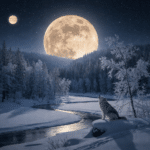
- Visual Impact: The extra light was bright enough to cast distinct shadows and illuminate snowy or frosty landscapes.
3. Cultural Names and Indigenous Traditions
The “Cold Moon” is just one of many descriptive titles used to track the seasons. While modern lists often group these under January, different Native and First Nations traditions have unique names for this specific lunar cycle:
- Frost Exploding Moon: A Cree name referring to trees cracking in the extreme cold.
- Freeze Up Moon: An Algonquin term for the hardening of the landscape.
- Severe Moon: A Dakota name reflecting the harsh survival conditions of deep winter.
4. Astrological Significance in Cancer
Beyond the physical appearance, this full moon held deep astrological meaning. Occurring in the sign of Cancer, the moon was in its “home” sign, making its energy exceptionally potent. This transit focused on themes of emotional reclamation, family roots, and internal safety. It was often viewed as a time for “emotional composting”—releasing the baggage of 2025 to make room for the year ahead.
5. Observing the Horizon and Planetary Pairings
The moon was especially striking near the horizon just after moonrise or before moonset. During these times, it often took on a yellow-orange tint due to the light passing through more of Earth’s atmosphere. Those who looked up on the night of January 3 may have also noticed a bright “star” nearby, which was actually the planet Jupiter sitting just a few degrees away.
The 2026 Cold Moon was the first of several notable lunar events this year, which will include a blue moon and another pair of supermoons in November and December.